
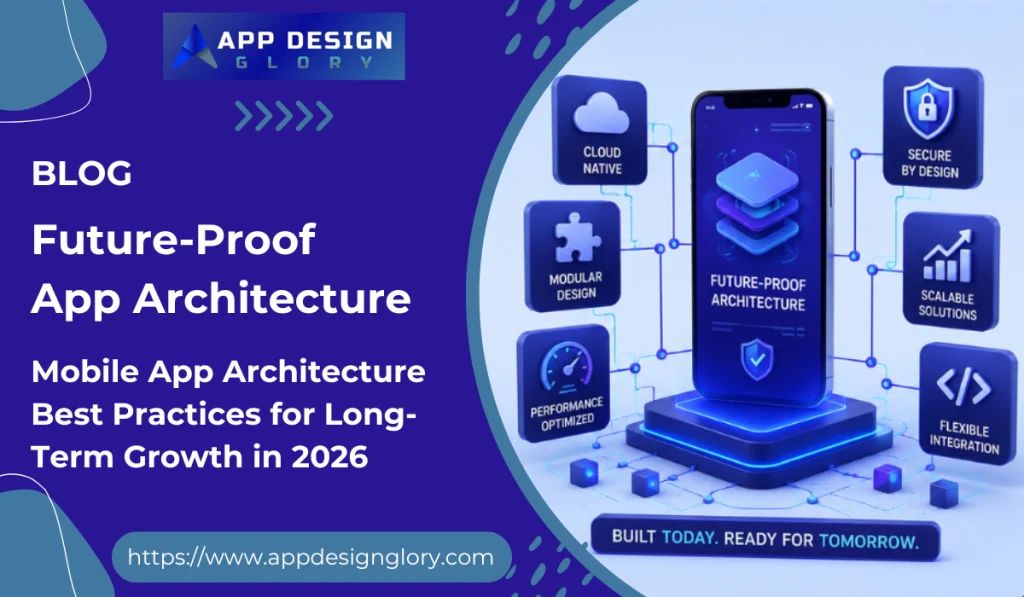
Why Mobile Apps Struggle to Scale as User Demand Grows
Introduction
Many mobile apps fail long before they run out of users.
They fail because their architecture cannot support growth.
An application that performs perfectly with 10,000 users may struggle when usage reaches 500,000 users. Slow APIs, overloaded databases, deployment challenges, and rising infrastructure costs often emerge when architecture decisions are made solely for short-term delivery.
In 2026, successful companies are prioritizing scalable mobile app architecture from the beginning. They are building systems designed to handle increasing traffic, evolving features, enterprise integrations, AI capabilities, and changing business requirements.
The result is faster innovation, lower operational risk, and a stronger foundation for long-term growth.
Quick Answer
Scalable mobile app architecture combines modular application design, resilient backend architecture, API gateways, cloud infrastructure, caching layers, security controls, and automated scaling. The most successful enterprise mobile applications are built to adapt to future growth rather than simply support current user demand, reducing technical debt and improving long-term performance.
What Is Mobile App Architecture?
Question
What is mobile app architecture?
Direct Answer
Mobile app architecture is the structural framework that defines how mobile applications, backend services, APIs, databases, infrastructure, and third-party integrations work together.
Expanded Explanation
Architecture determines:
- Application performance
- Scalability
- Security
- Maintainability
- Deployment speed
- Reliability
Good architecture supports business growth.
Poor architecture creates bottlenecks.
A scalable architecture ensures that adding users, features, and integrations does not require rebuilding the platform.
Example
A modern enterprise application may include:
- Mobile frontend
- API gateway
- Authentication service
- Backend services
- Cloud infrastructure
- Analytics platform
- Database layer
- Monitoring systems
Each component must operate efficiently as demand increases.
Action Step
Document your current architecture and identify single points of failure before growth exposes them.
Quick Fact
Most scalability problems originate from architecture decisions made during the first stages of development.
Why Apps Break at Scale
Question
Why do mobile applications fail when usage increases?
Direct Answer
Apps usually break at scale because backend systems, databases, APIs, and infrastructure were not designed for growing workloads.
Expanded Explanation
Common causes include:
Tight Coupling
Components become dependent on each other.
A failure in one area impacts the entire application.
Database Bottlenecks
As requests increase:
- Queries slow down
- Resources become constrained
- User experience suffers
Inefficient APIs
Poorly designed APIs increase latency and server load.
Lack of Caching
Every request reaches the database, creating unnecessary overhead.
Infrastructure Limitations
Static infrastructure cannot adapt to traffic spikes.
Real-World Scenario
A fitness application launches successfully and reaches 50,000 users.
Six months later:
- Push notifications fail
- User profiles load slowly
- Analytics dashboards become unusable
The issue is not user growth.
The issue is architecture that was never designed to scale.
Expert Insight
Scalability challenges often appear in backend systems long before users notice performance issues in the mobile interface.
Need expert feedback on your app architecture?
Get a Free Architecture Review from App Design Glory and identify scalability risks before they impact performance, user experience, or growth.
Core Components of Scalable Mobile App Architecture
Question
What components are essential for scalability?
Direct Answer
A scalable architecture includes frontend separation, backend services, API management, cloud infrastructure, caching systems, observability tools, and security controls.
Frontend Layer
Common technologies include:
- React Native
- Flutter
- Swift
- Kotlin
The frontend should remain independent from backend business logic.
Backend Services
Responsible for:
- Authentication
- Business workflows
- Data processing
- Integrations
Common technologies include:
- Node.js
- Python
- Java
Database Layer
Popular options include:
- PostgreSQL
- MongoDB
Caching Layer
Frequently powered by Redis.
Purpose:
- Reduce latency
- Lower database load
- Improve scalability
Cloud Infrastructure
Often built on:
- AWS
- Google Cloud
- Microsoft Azure
Observability Layer
Includes:
- Monitoring
- Logging
- Alerting
- Performance tracking
Technical Observation
Organizations that invest in observability early identify scalability risks significantly faster than those relying on reactive troubleshooting.
Enterprise Architecture Patterns
Question
Which architecture pattern is best for enterprise mobile app development?
Direct Answer
Most enterprise applications benefit from modular architectures that separate responsibilities while maintaining operational simplicity.
Architecture Comparison
Pattern |
Advantages |
Challenges |
| Monolithic | Fast development | Limited scalability |
| Modular Monolith | Balanced flexibility | Moderate complexity |
| Microservices | Independent scaling | Operational overhead |
| Event-Driven | High scalability | Increased coordination |
Recommendation
For most organizations:
- Early-stage products → Modular monolith
- Growth-stage products → Service-oriented architecture
- Enterprise-scale products → Microservices where justified
Expert Insight
Many engineering teams adopt microservices too early and increase complexity without gaining meaningful scalability benefits.
Backend Architecture Best Practices
Question
How should backend architecture support growth?
Direct Answer
Backend architecture should be modular, resilient, API-driven, and cloud-native.
Best Practices
Separate Business Domains
Examples:
- Authentication
- Billing
- Notifications
- Analytics
Use Asynchronous Processing
Move heavy workloads to queues.
Benefits:
- Faster user experiences
- Better resource utilization
Automate Deployments
Continuous integration reduces release risk.
Design for Failure
Every service should recover gracefully.
Technical Tip
If a single backend service outage can take down the entire application, the architecture requires redesign.
API Gateway Strategy
Question
Why is an API gateway important?
Direct Answer
An API gateway acts as a central entry point that manages traffic, security, routing, and performance across backend services.
Benefits
- Centralized authentication
- Rate limiting
- Traffic management
- Monitoring
- Security enforcement
Example
Instead of mobile apps calling multiple services directly:
Mobile App → API Gateway → Backend Services
This approach improves control and scalability.
Action Step
Review whether your APIs expose unnecessary complexity to mobile clients.
Quick Fact
API gateways often become one of the highest-impact improvements for growing mobile ecosystems.
Caching and Performance Optimization
Question
How can caching improve scalability?
Direct Answer
Caching reduces repeated database and service requests by storing frequently accessed data closer to users.
Common Caching Layers
Application Cache
Stores processed results.
Database Cache
Reduces query volume.
CDN Cache
Improves content delivery.
Example
Without caching:
Every request queries the database.
With caching:
Frequently accessed content loads instantly.
Technical Observation
Many performance bottlenecks can be solved with intelligent caching before expensive infrastructure upgrades become necessary.
The GROW Framework™ for Scalable Mobile Apps
Use the GROW Framework to evaluate architectural readiness.
G — Growth Readiness
Can the architecture support future users?
R — Resilience
Can services recover from failures?
O — Operational Visibility
Can teams monitor performance effectively?
W — Workload Distribution
Can traffic be distributed efficiently?
Actionable Recommendation
Score each area from 1–10 every quarter to identify scalability risks before they become production issues.
Need an Architecture Health Check?
A short architecture review can uncover hidden scalability bottlenecks, performance risks, and technical debt before they impact users.
App Design Glory offers a free architecture review for growing mobile platforms.
Mobile App Architecture Checklist
Infrastructure
- Cloud-native deployment
- Auto-scaling enabled
- Monitoring configured
- Disaster recovery documented
Backend
- API gateway implemented
- Modular services established
- Automated deployments enabled
- Security controls enforced
Data Layer
- Database optimization completed
- Backup strategy defined
- Caching implemented
- Growth projections reviewed
Operations
- Incident response documented
- Capacity planning performed
- Cost monitoring enabled
- Performance metrics tracked
Common Architecture Mistakes
Building for Millions of Users Immediately
Creates unnecessary complexity.
Ignoring Backend Scalability
Frontend optimization cannot compensate for backend bottlenecks.
Skipping Monitoring
Problems remain invisible until users complain.
Overusing Microservices
Complexity increases faster than business value.
Delaying Security Decisions
Security debt compounds rapidly.
Key Takeaways
Expert Insight
The best architectures evolve continuously rather than relying on major redesigns.
Technical Tip
Measure architecture success through uptime, deployment speed, user experience, and operational efficiency.
Key Takeaway
Scalable mobile app architecture requires:
- Modular design
- API-first thinking
- Cloud infrastructure
- Intelligent caching
- Strong security
- Continuous monitoring
Organizations that invest in architecture early reduce risk, accelerate innovation, and support long-term growth more effectively.
Conclusion
Mobile applications rarely fail because of user growth.
They fail because the architecture behind them cannot support that growth.
By implementing scalable design principles, modern backend architecture, API gateways, caching strategies, and cloud-native infrastructure, organizations can create platforms that remain reliable as usage expands.
The most successful mobile products in 2026 are not simply built for today’s requirements.
They are designed for tomorrow’s opportunities.
Frequently Asked Questions (FAQs)
What is scalable mobile app architecture?
Scalable mobile app architecture is a design approach that allows applications to support increasing users, traffic, and features without major performance degradation.
Why do mobile apps fail at scale?
Most failures stem from backend bottlenecks, poor database design, insufficient caching, or infrastructure limitations.
What is the role of an API gateway?
An API gateway manages traffic, security, monitoring, and communication between clients and backend services.
Is microservices architecture always necessary?
No. Many applications scale successfully using modular monolith architectures.
Which cloud platform is best for mobile apps?
AWS, Google Cloud, and Microsoft Azure all provide scalable infrastructure. The best choice depends on business and technical requirements.
How does caching improve app performance?
Caching reduces database load and improves response times by storing frequently accessed data.
What database is best for scalable mobile applications?
PostgreSQL and MongoDB are popular options depending on data structure and application requirements.
How often should architecture be reviewed?
At least every six months or after major product changes.
What is enterprise mobile app development?
Enterprise mobile app development focuses on secure, scalable, and maintainable applications designed for organizational use.
When should a company seek an architecture review?
Before major growth initiatives, platform modernization efforts, or significant feature expansions.
Ready to Build for Scale?
Request a Free Architecture Review with App Design Glory and discover how to create a secure, scalable, and future-ready mobile app architecture.