
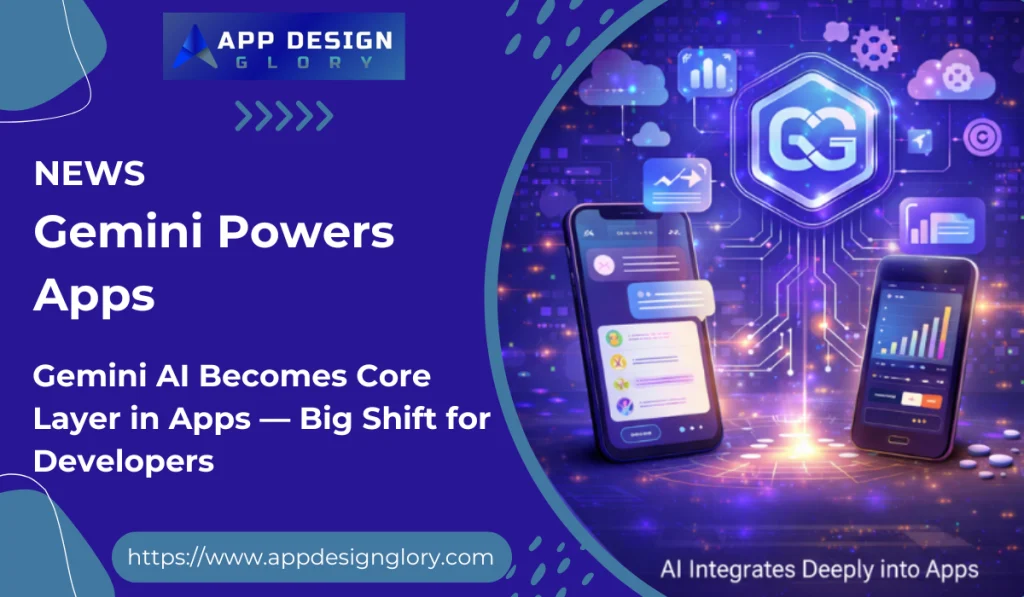
Google Expands Gemini Integration, Transforming How Apps Are Built in 2026
Google is rapidly advancing its strategy to embed Gemini directly into mobile and web applications. As a result, this shift is redefining how developers design, build, and scale modern digital products.
Instead of operating as a standalone assistant, Gemini now functions as a core layer within applications. Consequently, it enables real-time automation, smarter interactions, and seamless task execution across multiple platforms.
AI Moves From Feature to Foundation
Traditionally, developers treated AI as an additional feature. However, Gemini changes that approach by placing AI at the center of application architecture.
With this integration, apps can now:
- Automate complex, multi-step workflows within seconds
- Generate content and responses instantly
- Adapt interfaces based on real-time user behavior
- Assist developers with coding, testing, and optimization
As a result, applications are evolving from static systems into dynamic, intelligent ecosystems. Moreover, this transformation allows businesses to deliver faster and more personalized user experiences.
Impact on App Developers and Designers
For developers, Gemini significantly improves productivity. For example, AI-assisted coding tools now help write cleaner code, detect bugs early, and optimize performance more efficiently.
In addition, developers can:
- Reduce development time
- Automate repetitive tasks
- Improve code quality with AI suggestions
At the same time, UI/UX designers must rethink traditional design approaches. Instead of focusing only on layouts and navigation, they now design for:
- Conversational interfaces
- Predictive user journeys
- AI-driven personalization
Therefore, design is shifting from static visuals to interactive, intelligent experiences.
Growing Demand for AI-Ready Apps
As businesses continue to digitize operations, the demand for AI-powered applications is increasing rapidly. In fact, companies now prioritize intelligent systems that enhance both efficiency and engagement.
Businesses are actively seeking applications that can:
- Improve customer engagement through personalization
- Reduce manual workloads with automation
- Deliver real-time insights and responses
- Scale seamlessly with business growth
Furthermore, this growing demand creates new opportunities for development companies to build future-ready, AI-integrated solutions.
Industry Outlook
Looking ahead, the integration of Gemini signals a broader transition toward AI-first development. According to industry analysts, AI will become a standard component in most applications by 2026.
Consequently, companies that fail to adopt AI-driven strategies may struggle to remain competitive. On the other hand, businesses that embrace this shift can gain a significant advantage in innovation and user experience.
Conclusion
Google’s expansion of Gemini integration highlights a major turning point in application development. More importantly, it demonstrates how AI is becoming the foundation of modern digital experiences.
As automation, personalization, and intelligent workflows continue to evolve, developers and businesses must adapt quickly. Ultimately, those who leverage AI effectively will lead the next generation of app innovation.
Your App Design Glory Awaits – Get a Free Consultation Today!