
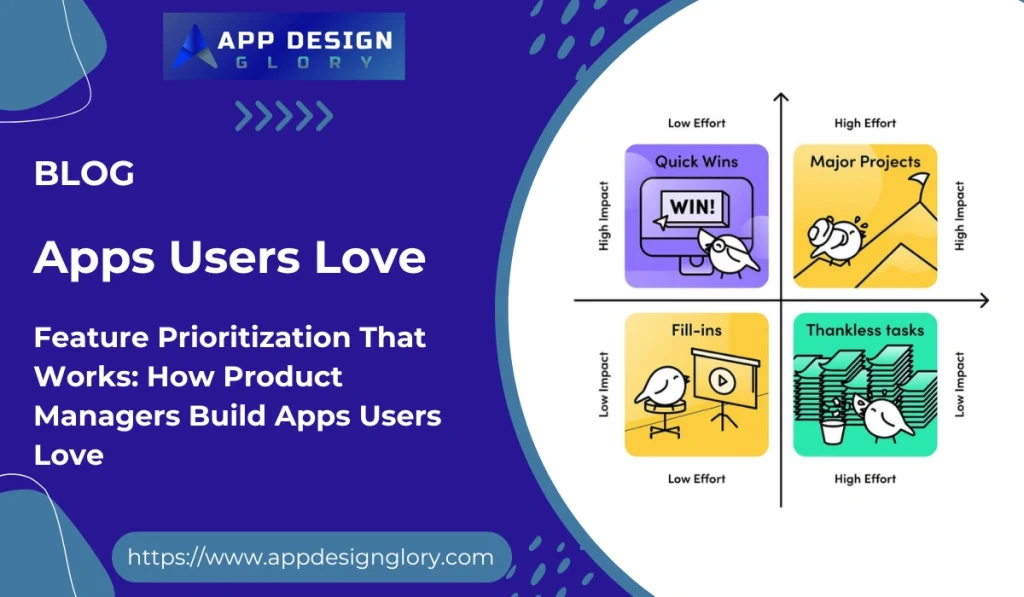
Mastering Feature Prioritization for Successful App Development
If you want to build an app that truly resonates with users, app feature prioritization is the secret sauce — and it’s what separates mediocre apps from ones people love. When product managers thoughtfully prioritize features based on real user needs, business goals, and technical feasibility, they create a roadmap that delivers value early and builds trust. In this article, you’ll discover how to apply effective feature prioritization and product roadmapping to deliver user-focused design and a product that grows strategically over time.
What Is Feature Prioritization and Why It Matters
Feature prioritization is the process of deciding which features to build first — based on a combination of user needs, business impact, technical complexity, and long-term strategy. Product roadmapping then uses these prioritized features to plan development phases over time.
Without proper prioritization, teams often:
- Build flashy but unused features
- Overrun budget and timelines
- Miss core user needs
With prioritization and a solid roadmap, you ensure early releases provide real value, validate assumptions, and reduce wasted effort.
Key Principles Behind User-Focused Design & Prioritization
When choosing what to build first, product managers should focus on:
- Real user pain points and needs — not assumptions or “nice-to-haves.”
- Business value — features that drive revenue, engagement, or retention.
- Technical feasibility and resource constraints — balance ambition with what’s realistically deliverable within your budget or team capacity.
- Scalability and maintainability — avoid short-term hacks that block future growth or updates.
- Feedback loops and data-driven iteration — use analytics, user feedback, and real-world testing to adjust priorities over time.
Applying these principles helps create apps that delight users, serve business goals, and evolve gracefully.
Common Frameworks for Feature Prioritization & Roadmapping
Product teams often rely on structured frameworks to prioritize features. Some widely used ones include:
- MoSCoW method — classify features as Must-have, Should-have, Could-have, and Won’t-have now. This helps clarify the minimal viable scope.
- RICE scoring — rank features by Reach (how many users), Impact (value per user), Confidence (on estimates), and Effort (cost/time). Features with the highest RICE score get built first.
- User story mapping & feedback-based prioritization — build around user journeys; prioritize functions addressing the highest pain points or most common flows.
These frameworks create transparency — both internally and for stakeholders — and help avoid building unnecessary features early on.
How to Build a Product Roadmap That Reflects Priorities
Here’s a step-by-step approach to creating a robust product roadmap:
- Gather requirements and user insights — interviews, surveys, analytics, or competitive analysis.
- List all possible features/ideas — brainstorm broadly without limiting scope.
- Group and categorize features — by user need, business value, risk, and technical dependencies.
- Use a prioritization framework (MoSCoW, RICE, etc.) to score or rank features.
- Define releases/phases — MVP (core), next versions (improvements), long-term roadmap.
- Communicate roadmap clearly — with stakeholders, developers, and any external parties (e.g., clients, investors).
- Review and iterate regularly — re-evaluate based on feedback, metrics, and changing business needs.
This process keeps development aligned with what truly matters and helps ensure timely delivery.
Why Many Apps Fail — And How Prioritization Saves Them
Despite best intentions, many apps fail or underperform. Common reasons:
- Overloaded feature set leading to bugs, complexity, and slow performance
- Ignoring user needs and focusing on “what looks cool” instead of “what solves a problem.”
- Lack of post-launch planning and maintenance — features become outdated or user interests shift
- Poor roadmap management — features pile up without a clear vision or milestones
By committing to feature prioritization and roadmapping, teams avoid these pitfalls: they launch lean, validate quickly, adapt fast, and build a sustainable, user-focused product over time.
When to Build vs When to Wait — Prioritization in Action
Not every feature needs to be built immediately. Good product managers recognize when to delay or discard ideas. Here are scenarios where postponing makes sense:
- The Feature is “nice-to-have” and doesn’t address the core user need
- Technical complexity is high while the benefit is low
- Use case is rare; building it now won’t impact many users
- Resource or budget constraints make it risky
By deferring less-critical features, you stay lean and maintain flexibility as you learn from users and market feedback.
How a Professional Team Helps — Where App Design Glory Stands Out
Prioritization and roadmapping look simple — but for non-technical founders or busy teams, building structure, making tradeoffs, and managing development cycles is hard. This is where App Design Glory shines:
- Their experience across startups, enterprises, and niche industries helps align feature sets with real business and user needs.
- They provide end-to-end delivery — from design to development to maintenance — ensuring that prioritized features are built cleanly, scalable, and maintainable.
- They use transparent planning and communication, giving founders clarity and confidence even without in-house technical knowledge.
Partnering with a team like App Design Glory helps you avoid common pitfalls and build apps that scale, evolve, and delight users.
Conclusion
Feature prioritization, smart product roadmapping, and user-focused design are the foundations of building apps that users genuinely love. By committing to clarity, disciplined planning, and user needs — and possibly partnering with a team like App Design Glory — you increase your chances of launching a useful, scalable, and successful product.
Your App Design Glory Awaits: Get a Free Consultation Today!
If you’re ready to build, launch, or refine your app with expert help and strategic prioritization, reach out to App Design Glory and turn your vision into a user-focused reality.
Frequently Asked Questions (FAQ)
Q1. What’s the difference between a product roadmap and a backlog?
A backlog is a long list of all ideas, features, and improvements. A roadmap organizes and sequences what will be built when, based on priority, business goals, and resources.
Q2. Which prioritization method is best for a small team or startup?
MoSCoW and RICE are widely used for early-stage projects because they are simple, flexible, and focus on core value rather than over-engineering.
Q3. How often should I revisit priorities and the roadmap?
Ideally, every few weeks or after each release — whenever you get new user feedback or business changes. Flexibility is key.
Q4. Should I always start with an MVP — or build a full feature set from day one?
Start with a minimal set of core features (MVP) that solve the main user pain points. You can expand later based on feedback and demand.
Q5. What if stakeholders request many “important” features at once?
Use prioritization frameworks to evaluate each request objectively — by value, impact, effort, and strategic alignment — then communicate trade-offs clearly.
Q6. Can over-prioritization slow down innovation?
If used rigidly, yes. That’s why roadmaps should be revisited regularly, and you should remain open to re-prioritize when new data or opportunities arise.
Prioritize Your App Features with App Design Glory — Get Started Now