
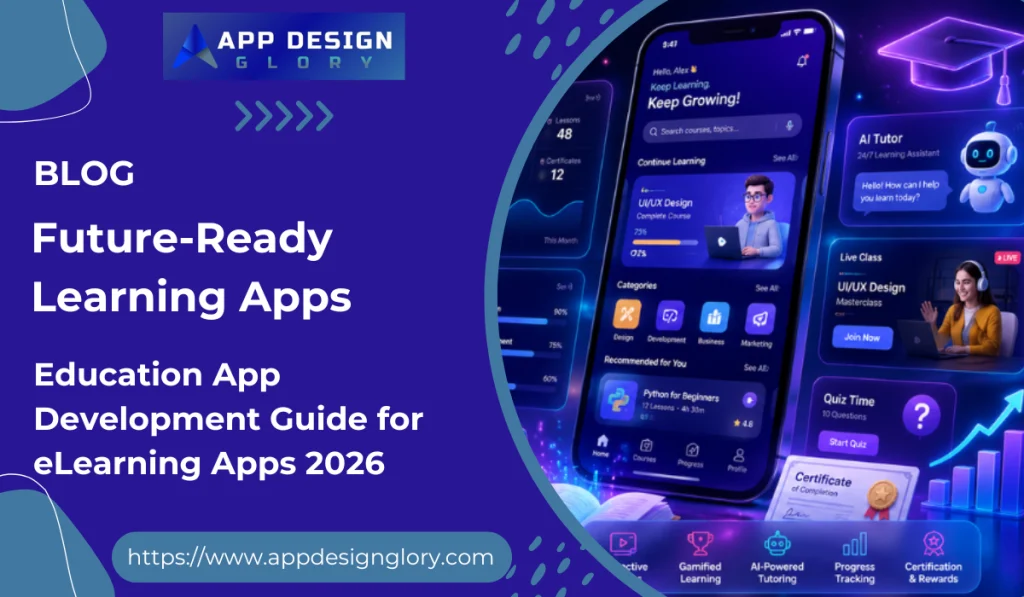
Education App Development Strategies for Scalable eLearning Apps in 2026
The demand for education app development is growing rapidly as schools, startups, universities, and enterprises invest heavily in digital learning experiences. In 2026, businesses that build scalable eLearning apps and innovative edtech apps can unlock new revenue streams, improve learner engagement, and create long-term customer loyalty.
From AI-powered tutoring systems to mobile-first virtual classrooms, education technology is transforming how people learn worldwide. However, creating a successful educational platform requires more than coding an app. Businesses need the right strategy, technology stack, monetization model, scalability planning, and user experience optimization.
This guide explains everything USA businesses need to know about education app development, including costs, features, technologies, trends, and proven strategies for building profitable learning platforms.
What Is Education App Development?
Education app development is the process of designing, developing, testing, and launching digital learning applications for mobile devices, tablets, and web platforms. These apps are used for online learning, employee training, virtual classrooms, certification programs, language learning, tutoring, and academic management.
Modern eLearning apps combine interactive learning experiences with AI, cloud computing, analytics, gamification, and mobile accessibility to improve knowledge retention and learner engagement.
Popular types of edtech apps include:
- Online course platforms
- Virtual classroom apps
- Corporate training systems
- Language learning apps
- Kids learning applications
- Test preparation platforms
- Educational gaming apps
- Skill development marketplaces
Why Education App Development Matters for USA Businesses
The USA education technology market continues to grow due to rising remote learning adoption, corporate digital training, and demand for personalized education experiences.
Businesses investing in education app development gain:
Higher Customer Engagement
Interactive mobile learning improves retention and session duration.
Recurring Revenue Opportunities
Subscription-based learning platforms create stable long-term income.
Scalability
Cloud-powered eLearning apps can serve thousands or millions of users globally.
Competitive Advantage
Advanced edtech apps help startups and enterprises stand out in a crowded market.
Better Accessibility
Mobile-first platforms make education available anytime and anywhere.
Companies looking for scalable digital learning ecosystems often invest in professional mobile app development services USA to accelerate development and reduce technical risks.
How Education App Development Works
Building a successful learning platform requires a structured development roadmap.
Step 1: Define the Learning Model
Choose your app category:
App Type |
Purpose |
| LMS Platform | Enterprise training |
| Online Course App | Video-based learning |
| Tutoring App | One-on-one education |
| Kids Learning App | Interactive education |
| Certification App | Professional skills |
| Language Learning App | Practice & assessment |
Step 2: Identify Target Users
Your audience may include:
- Students
- Universities
- Enterprises
- Teachers
- Coaches
- Corporate HR teams
- Certification providers
Understanding user behavior is critical for creating effective edtech apps.
Step 3: Build an MVP
An MVP helps validate demand before investing heavily.
Core MVP features:
- User registration
- Video lessons
- Quizzes
- Progress tracking
- Push notifications
- Payment integration
Many startups use custom mobile app development solutions to launch MVPs quickly while maintaining scalability.
Step 4: UI/UX Design
Learning platforms must be simple and intuitive.
Strong UI/UX improves:
- User retention
- Course completion rates
- Engagement
- Accessibility
Businesses can also explore internal resources about UI/UX design best practices for mobile learning platforms.
Step 5: Backend & API Integration
Your backend powers:
- User management
- Video streaming
- Analytics
- Payments
- Notifications
- AI recommendations
Common integrations include:
- Zoom APIs
- Stripe
- Firebase
- AWS
- Google Classroom APIs
Essential Features for Modern eLearning Apps
Successful education app development requires features that improve engagement, retention, and monetization.
Student Features
User Profiles
Track learning progress and achievements.
Course Dashboards
Provide easy course access and navigation.
Video Streaming
Enable high-quality educational content delivery.
Gamification
Badges, points, and rewards improve engagement.
Offline Learning
Allow downloads for offline study.
Push Notifications
Increase course participation and reminders.
Instructor Features
Course Management
Upload and organize lessons.
Live Classes
Enable real-time learning sessions.
Assignment Tracking
Manage student submissions efficiently.
Analytics Dashboard
Monitor student performance and engagement.
Admin Features
User Management
Control permissions and platform access.
Revenue Tracking
Monitor subscriptions and purchases.
Content Moderation
Ensure quality educational content.
Security Controls
Protect user data and payment information.
Education App Development Process Explained
Discovery & Research
This phase includes:
- Market analysis
- Competitor research
- User persona creation
- Feature planning
Competitor analysis often reveals gaps in personalization and learner retention strategies.
Wireframing & Prototyping
UI/UX prototypes help visualize user journeys before coding begins.
Frontend Development
Technologies used include:
- Flutter
- React Native
- Swift
- Kotlin
Backend Development
Backend systems handle scalability and data storage.
Popular technologies:
- Node.js
- Python
- Laravel
- AWS
- Firebase
QA & Testing
Testing ensures:
- Device compatibility
- App performance
- Security compliance
- Bug-free experience
Businesses focused on long-term growth often prioritize app performance optimization during this stage.
Launch & Maintenance
After deployment:
- Monitor analytics
- Release updates
- Improve UX
- Add AI features
Education App Development Cost in 2026
The cost depends on complexity, platform, and features.
App Complexity |
Estimated Cost |
| Basic MVP | $20,000–$50,000 |
| Mid-Level App | $50,000–$120,000 |
| Enterprise Platform | $120,000–$300,000+ |
Key Cost Factors
Platform Choice
- iOS
- Android
- Cross-platform
- Web app
Features
Advanced features increase costs:
- AI learning assistants
- AR/VR learning
- Gamification
- Live streaming
Team Structure
Costs vary depending on:
- In-house teams
- Freelancers
- Development agencies
Security Requirements
Education apps handling sensitive data require compliance and advanced encryption.
Best Technology Stack for eLearning Apps
Choosing the right technology stack impacts scalability and performance.
Layer |
Technologies |
| Frontend | Flutter, React Native |
| Backend | Node.js, Python |
| Database | PostgreSQL, MongoDB |
| Cloud | AWS, Azure |
| Video Streaming | WebRTC |
| AI | TensorFlow, OpenAI APIs |
Common Mistakes Businesses Make
Ignoring User Experience
Poor navigation reduces learner engagement.
Overloading Features
Launching with unnecessary features increases development costs and delays.
Weak Scalability Planning
Apps without cloud scalability struggle with traffic spikes.
Poor Monetization Strategy
Many apps fail because they lack sustainable revenue models.
Popular monetization models include:
- Subscriptions
- Freemium access
- Corporate licensing
- Course sales
- Ads
Weak Security Infrastructure
Educational platforms store sensitive user data and payment information.
Security should include:
- SSL encryption
- Secure authentication
- GDPR compliance
- FERPA considerations
Real-World Education App Use Cases
Startup Example
A startup launches an AI-powered tutoring app with subscription-based lessons and gamification.
Result:
- Higher user retention
- Monthly recurring revenue
- Investor attraction
Enterprise Example
A corporation develops an internal employee training app.
Benefits:
- Reduced onboarding costs
- Improved employee performance
- Better compliance training
Niche Industry Example
A healthcare company creates a certification training platform for medical professionals.
Features include:
- Video tutorials
- Compliance testing
- Digital certificates
Hidden Opportunities Competitors Often Miss
Many blogs discuss app development basics but ignore advanced growth opportunities.
AI-Powered Personalized Learning
AI can recommend lessons based on user behavior.
Microlearning
Short educational content improves retention for busy professionals.
Community Learning Features
Adding forums and peer collaboration increases engagement.
AR/VR Learning Experiences
Immersive learning improves technical training effectiveness.
Voice Search Optimization
Voice-enabled learning interfaces are becoming increasingly popular in mobile education.
Future Trends in Education App Development
AI Tutors
AI-powered assistants will personalize learning paths automatically.
Blockchain Certifications
Secure digital credentials will gain mainstream adoption.
Hybrid Learning Platforms
Apps combining online and offline learning will dominate.
Gamified Learning Ecosystems
Gamification will continue improving retention and motivation.
Data-Driven Learning Analytics
Advanced analytics will help institutions improve student performance.
Why Choose App Design Glory for Education App Development?
App Design Glory helps USA startups and enterprises build scalable, secure, and user-focused educational applications.
Our expertise includes:
- Mobile app development
- SaaS learning platforms
- UI/UX optimization
- Cloud scalability
- AI integrations
- Enterprise-grade security
Businesses looking to launch modern eLearning apps can benefit from our strategic product planning, agile development process, and long-term support.
Need help building your app?
Advanced Strategies for Scaling EdTech Apps
Focus on User Retention Metrics
Track:
- Daily active users
- Course completion rates
- Session duration
- Churn rates
Implement Adaptive Learning
AI-based adaptive systems improve educational outcomes.
Use Cloud Infrastructure
Cloud-based platforms support scalability during traffic spikes.
Optimize Mobile Performance
Fast-loading apps improve user satisfaction and SEO rankings.
Conclusion
The future of digital learning belongs to businesses investing in scalable, engaging, and AI-powered educational platforms. Modern education app development is no longer limited to schools and universities. Today, startups, enterprises, healthcare providers, and niche industries are building advanced eLearning apps and intelligent edtech apps to improve training, increase accessibility, and create recurring revenue opportunities.
However, success requires more than just coding an app. Businesses need strategic planning, exceptional UI/UX, secure cloud infrastructure, scalable architecture, and user-focused experiences that adapt to changing learning behaviors.
From MVP planning to enterprise-grade learning ecosystems, investing in the right development partner can dramatically improve business growth and long-term ROI.
App Design Glory helps businesses across the USA create future-ready educational platforms tailored to modern market demands.
Frequently Asked Questions (FAQs)
How long does education app development take?
A basic MVP can take 3–6 months, while enterprise-grade educational platforms may require 9–18 months depending on complexity and integrations.
What is the average cost of developing an eLearning app?
The cost typically ranges from $20,000 to $300,000+ based on features, scalability, AI integrations, and platform requirements.
Which technologies are best for eLearning apps?
Popular technologies include Flutter, React Native, Node.js, AWS, Firebase, WebRTC, and AI frameworks like TensorFlow.
Can education apps support live video classes?
Yes. Modern eLearning apps can integrate Zoom APIs, WebRTC, and live streaming technologies for virtual classrooms and webinars.
How do education apps generate revenue?
Common monetization methods include subscriptions, paid courses, enterprise licensing, advertisements, and certification fees.
Why is UI/UX important in educational apps?
A strong UI/UX design improves learner engagement, retention, accessibility, and overall learning outcomes, which directly impacts business success.
Start your education app development journey with a free strategy consultation today.