
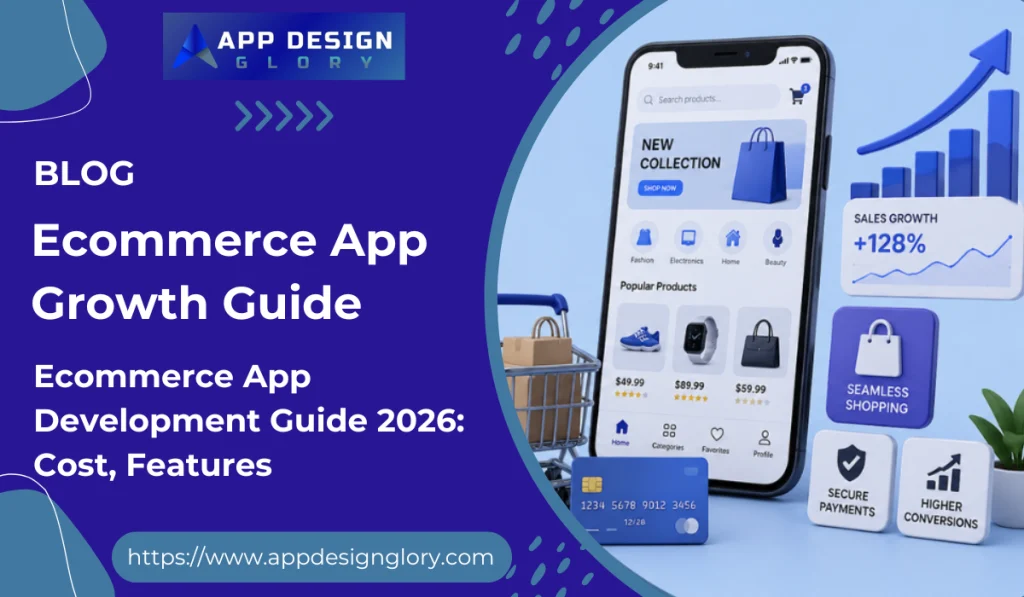
How to Build a Profitable Ecommerce App in 2026
Ecommerce app development is the most effective way to create a high-converting digital store that drives revenue, increases customer retention, and scales your business in today’s mobile-first economy. If you want to build an ecommerce app, you need the right mix of strategy, essential shopping app features, scalable architecture, and a clear cost roadmap.
This guide gives you a step-by-step, real-world framework used by successful US startups and enterprises to launch profitable ecommerce apps.
What Is Ecommerce App Development? (Quick Definition)
Ecommerce app development is the process of designing and building mobile applications that allow users to browse, purchase, and manage products or services directly from their smartphones.
Types of Ecommerce Apps You Can Build
Type |
Business Model |
Example Use Case |
| B2C | Business to Consumer | Retail shopping app |
| B2B | Wholesale transactions | Supplier ordering system |
| Marketplace | Multi-vendor | Amazon-like platform |
| D2C | Direct-to-consumer | Brand-owned store |
Why Do Businesses Prefer Ecommerce Apps Over Websites?
Direct Answer:
Ecommerce apps outperform websites because they offer faster performance, personalized experiences, and higher conversion rates. Features like push notifications, saved preferences, and seamless checkout help businesses increase sales and customer loyalty.
Key Advantages
- Up to 3x higher conversion rates
- Faster load times than websites
- Personalized product recommendations
- Push notification marketing
- Higher repeat purchases
Must-Have Shopping App Features (That Drive Sales)
To succeed in ecommerce app development, you must include high-impact shopping app features that improve usability and conversions.
Core Features Checklist
1. Smart Product Discovery
- AI-powered search
- Filters & sorting
- Voice search
2. User-Friendly Interface
- Clean UI/UX
- Easy navigation
- Mobile-first design
3. Secure Checkout System
- Multiple payment gateways
- One-click checkout
- Guest checkout option
4. Real-Time Order Tracking
- Delivery updates
- Notifications
5. Push Notifications
- Cart reminders
- Promotions & offers
6. Customer Reviews & Ratings
- Social proof
- Trust building
Feature Impact vs Cost Table
Feature Type |
Examples |
Business Impact |
| Basic | Login, product listing | Essential |
| Medium | Payments, tracking | Conversion boost |
| Advanced | AI recommendations | Revenue growth |
Ecommerce App Development Cost Breakdown (2026)
Direct Answer:
The cost of ecommerce app development ranges between $25,000 and $200,000+, depending on complexity, features, and scalability requirements.
Detailed Cost Structure
Component |
Estimated Cost |
| UI/UX Design | $5,000 – $20,000 |
| App Development | $20,000 – $150,000 |
| Backend Infrastructure | $10,000 – $50,000 |
| QA & Testing | $5,000 – $15,000 |
What Affects Ecommerce App Cost?
- Number of features
- Custom vs template solution
- Platform (iOS, Android, or both)
- Payment integrations
- Security and compliance
Tip: Start with an MVP to reduce cost and validate your idea faster.
How to Build an Ecommerce App (Step-by-Step Blueprint)
Step 1: Validate Your Idea
- Identify target audience
- Analyze competitors
- Test demand with landing pages
Step 2: Define Your Business Model
- Subscription
- Commission-based
- Direct product sales
Step 3: Plan Features (MVP First)
Focus on:
- Product catalog
- Checkout system
- User accounts
Step 4: Design UX/UI
- Conversion-focused design
- Mobile-first experience
Step 5: Develop the App
- Frontend + backend development
- API integrations
Step 6: Test & Launch
- QA testing
- App Store optimization
Need help building your app? Get expert consultation from App Design Glory.
Hidden Insights: What Competitors Won’t Tell You
Advanced Growth Strategies
- Checkout friction reduction = +30% conversions
- Personalized recommendations = higher cart value
- Cart abandonment recovery = revenue boost
- Micro UX interactions = better engagement
Expert Insight
The most successful ecommerce apps are not feature-heavy—they are experience-driven.
Recommended Ecommerce Tech Stack
Layer |
Technologies |
| Frontend | React Native, Flutter |
| Backend | Node.js, Laravel |
| Database | MongoDB, MySQL |
| Payments | Stripe, PayPal |
Real-World Example (Startup Case Study)
Fashion Ecommerce App
- Launched MVP in 90 days
- Features: catalog + checkout
- Result: 200% revenue growth in 12 months
Key Takeaway
Start simple → optimize → scale fast.
Who Should Invest in Ecommerce App Development?
Startups
- Launch digital-first brands
- Validate ideas quickly
Enterprises
- Build omnichannel strategy
- Improve retention
Niche Businesses
- Target specific audiences
- Offer personalized shopping
Common Mistakes to Avoid
- Poor UI/UX design
- Complicated checkout process
- Ignoring scalability
- Weak marketing strategy
- Overloading features early
Future Trends in Ecommerce App Development (2026)
- AI-powered personalization
- Augmented reality shopping
- Voice commerce
- Social commerce integration
- One-click checkout experiences
Topical Authority Clusters (SEO Boost)
Ecommerce UX Optimization
- Conversion-focused design
- Mobile usability
App Monetization Strategy
- Pricing models
- Revenue optimization
Mobile Commerce Trends
- AI & automation
- Customer behavior analytics
Conclusion
Ecommerce app development is essential for businesses that want to compete and scale in the digital marketplace. By focusing on high-performing shopping app features, understanding cost structures, and following a structured development process, you can successfully build an ecommerce app that generates consistent revenue and long-term growth.
The difference between average and successful apps lies in execution, strategy, and user experience.
Frequently Asked Questions (FAQs)
1. How long does ecommerce app development take?
It typically takes 3–6 months for an MVP and up to 9 months for a fully featured app, depending on complexity.
2. What are the most important shopping app features?
Core features include product catalog, secure checkout, search filters, push notifications, and order tracking.
3. How much does it cost to build an ecommerce app?
The cost ranges from $25,000 to $200,000+ depending on features and scalability.
4. Should I build a native or cross-platform app?
Cross-platform apps are cost-effective, while native apps offer better performance and customization.
5. How do ecommerce apps make money?
Through product sales, subscriptions, commissions, and in-app advertising.
6. Can startups afford ecommerce app development?
Yes, startups can begin with an MVP and scale gradually to reduce upfront investment.
Start your app development journey with a free strategy session today.