
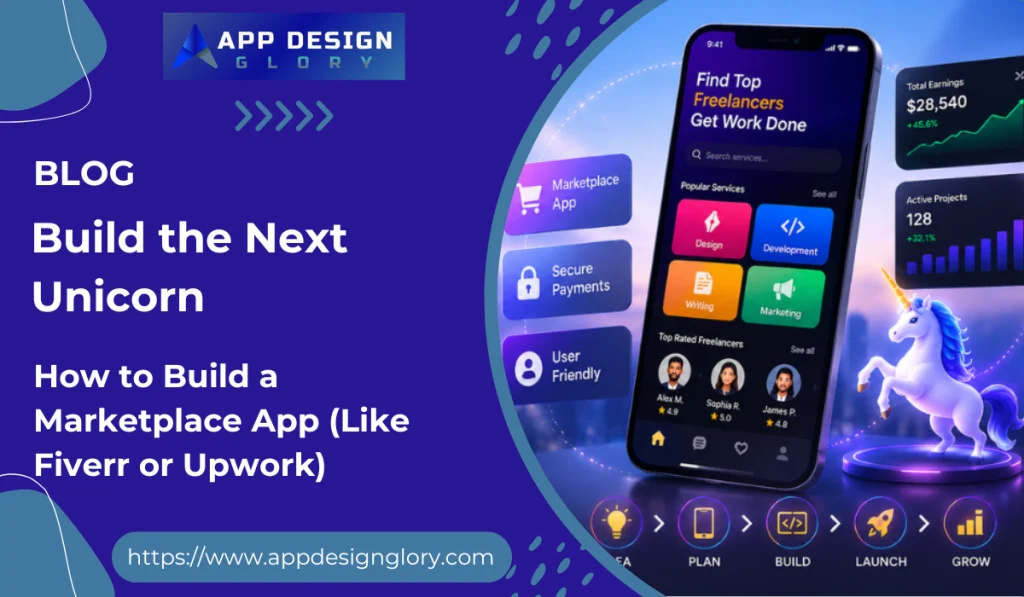
Marketplace App Development Strategies for USA Startups & Enterprises
The demand for marketplace app development is exploding in 2026 as startups and enterprises race to create scalable digital platforms connecting buyers and sellers in real time. Whether you want to build a freelance marketplace like Fiverr, a service platform like Upwork, or a niche B2B ecosystem, choosing the right development strategy can determine your success or failure.
Modern marketplace apps require more than basic functionality. They need scalable architecture, secure payment systems, intelligent matching algorithms, seamless UI/UX, and high-performance infrastructure capable of handling thousands of users simultaneously.
This guide explains exactly how to build marketplace platform solutions that scale, generate revenue, and outperform competitors in the USA market.
What Is Marketplace App Development?
Featured Snippet Answer
Marketplace app development means building a digital platform where buyers and sellers can easily connect, buy or sell products and services, make secure payments, and manage everything in one simple app or website.
Marketplace platforms include apps like Fiverr, Upwork, Airbnb, Etsy, and Uber.
These platforms typically include:
- User accounts
- Search functionality
- Messaging systems
- Payment gateways
- Ratings and reviews
- Admin dashboards
Why Marketplace Apps Matter for USA Businesses
Marketplace platforms dominate modern digital commerce because they create scalable ecosystems rather than traditional one-way services.
Why Investors Love Marketplace Models
Marketplace businesses scale faster because:
- Supply and demand grow simultaneously
- Revenue becomes recurring
- Customer acquisition compounds over time
- Platform effects increase profitability
Examples include:
- Fiverr
- Upwork
- Amazon
- Airbnb
- DoorDash
Benefits for Startups and Enterprises
Startups
Marketplace apps help startups:
- Validate ideas quickly
- Build recurring revenue
- Create scalable ecosystems
Enterprises
Large companies use marketplace platforms to:
- Expand digital services
- Connect multiple vendors
- Streamline transactions
- Improve customer retention
How Marketplace Apps Work
Marketplace apps operate through multi-user ecosystems.
Core Workflow
Step 1: User Registration
Users create:
- Buyer accounts
- Seller accounts
- Business profiles
Step 2: Listings & Discovery
Sellers publish:
- Services
- Products
- Packages
- Pricing details
Buyers discover listings using:
- Search
- Filters
- AI recommendations
Step 3: Transactions
The platform handles:
- Secure payments
- Escrow systems
- Commission calculations
Step 4: Fulfillment & Communication
Users interact through:
- Chat systems
- File sharing
- Notifications
- Order tracking
Step 5: Reviews & Reputation
Ratings build:
- Trust
- Transparency
- Platform quality
Types of Marketplace Platforms
B2C Marketplaces
Businesses sell directly to consumers.
Examples:
- Amazon
- Walmart Marketplace
Peer-to-Peer (P2P)
Users transact directly with each other.
Examples:
- Airbnb
- eBay
Service Marketplaces
Freelancers or professionals offer services.
Examples:
- Fiverr
- Upwork
On-Demand Marketplaces
Real-time services are delivered instantly.
Examples:
- Uber
- DoorDash
Niche Industry Platforms
Focused marketplaces target specialized audiences.
Examples:
- Healthcare staffing
- Logistics marketplaces
- SaaS integrations
Essential Features for Marketplace App Development
User Authentication
Secure login methods:
- Email verification
- Social login
- Biometric authentication
Advanced Search & Filters
Users expect:
- Fast results
- Smart recommendations
- Geo-based discovery
Real-Time Messaging
Communication features improve:
- Trust
- Engagement
- Conversion rates
Payment Gateway Integration
Popular integrations include:
- Stripe
- PayPal
- Apple Pay
- Google Pay
Ratings & Reviews
Review systems help:
- Reduce fraud
- Build trust
- Improve transparency
Admin Dashboard
Admin panels control:
- Users
- Transactions
- Analytics
- Reports
- Content moderation
Marketplace App Development Process
Step 1: Validate the Business Idea
Before development begins:
- Identify target audience
- Analyze competitors
- Define monetization strategy
Questions to Answer
- What problem does the platform solve?
- Who are the buyers and sellers?
- Why will users choose your platform?
Step 2: Define the Marketplace Model
Choose between:
- Commission-based
- Subscription-based
- Listing fees
- Freemium models
Step 3: Create the MVP
An MVP should include:
- Core marketplace features
- User registration
- Listings
- Payments
- Messaging
Businesses seeking scalable MVP launches often rely on custom mobile app development solutions to accelerate product validation.
Step 4: Build UI/UX Design
Marketplace success depends heavily on user experience.
Key priorities:
- Fast onboarding
- Simple navigation
- Trust-building interfaces
- Mobile responsiveness
You can also explore modern strategies related to UI optimization and customer engagement through advanced UI/UX design approaches.
Step 5: Backend Development
The backend handles:
- Databases
- APIs
- Authentication
- Payment processing
- Notifications
Step 6: Launch & Optimization
After launch:
- Monitor analytics
- Improve retention
- Optimize performance
- Scale infrastructure
Businesses improving scalability should also review modern app performance optimization techniques.
Marketplace App Development Cost in 2026
Estimated Marketplace Development Costs
Complexity |
Estimated Cost |
| Basic MVP | $25,000–$50,000 |
| Mid-Level Marketplace | $50,000–$120,000 |
| Enterprise Marketplace | $120,000–$300,000+ |
What Impacts Development Costs?
Features
Advanced functionality increases costs:
- AI recommendations
- Real-time chat
- Escrow payments
- Video calling
Platform Choice
Options include:
- iOS only
- Android only
- Cross-platform
- Web + mobile ecosystem
Scalability Requirements
Large platforms require:
- Cloud architecture
- High-performance databases
- CDN systems
- API optimization
Technology Stack for Marketplace Platforms
Frontend Technologies
- React Native
- Flutter
- Swift
- Kotlin
Backend Technologies
- Node.js
- Python
- Laravel
- Django
Cloud Infrastructure
- AWS
- Google Cloud
- Azure
Database Systems
- PostgreSQL
- MongoDB
- Firebase
APIs & Integrations
Marketplace platforms often require:
- Payment APIs
- Geolocation APIs
- Messaging APIs
- AI recommendation engines
Advanced Marketplace Features Competitors Ignore
Most blogs stop at basic features. However, modern marketplace apps in 2026 need advanced systems to compete effectively.
AI-Powered Recommendations
AI improves:
- Product matching
- User engagement
- Conversion rates
Dynamic Pricing Algorithms
Platforms can optimize pricing automatically based on:
- Demand
- Competition
- User behavior
Escrow Payment Protection
Escrow systems improve:
- Transaction security
- Buyer confidence
- Seller trust
Fraud Detection Systems
Machine learning helps identify:
- Fake accounts
- Suspicious transactions
- Spam activity
Common Marketplace Development Mistakes
Ignoring Liquidity Problems
A marketplace fails without balanced:
- Buyers
- Sellers
- Transactions
Startups must carefully manage early growth.
Overbuilding the MVP
Many founders waste budgets building unnecessary features before validating demand.
Focus first on:
- Core functionality
- User acquisition
- Market validation
Weak User Experience
Poor navigation reduces:
- Retention
- Transactions
- Trust
Businesses looking for professional mobile app development services USA often prioritize strategic UX architecture to improve growth metrics.
Poor Scalability Planning
Marketplace traffic can grow rapidly.
Without scalable architecture:
- Apps crash
- Performance slows
- User churn increases
Real-World Marketplace App Examples
Fiverr
Key strengths:
- Gig-based discovery
- Simplified onboarding
- Clear pricing structure
Upwork
Success factors:
- Enterprise-grade hiring tools
- Escrow systems
- Advanced filtering
Airbnb
Airbnb succeeded because it:
- Built trust systems
- Prioritized UX
- Optimized mobile booking
Uber
Uber revolutionized:
- Real-time marketplaces
- GPS integrations
- On-demand infrastructure
Future Trends in Marketplace App Development
AI Marketplace Automation
AI will power:
- Automated support
- Personalized experiences
- Smart recommendations
Web3 & Decentralized Marketplaces
Blockchain technology enables:
- Peer-to-peer ownership
- Reduced transaction fees
- Smart contracts
Super Apps
Marketplaces are evolving into ecosystems combining:
- Payments
- Messaging
- Commerce
- Subscriptions
Hyper-Personalization
Apps increasingly use behavioral analytics to:
- Improve retention
- Boost conversions
- Increase customer lifetime value
Why Choose App Design Glory
App Design Glory helps USA startups and enterprises build scalable marketplace ecosystems designed for long-term growth.
What Sets App Design Glory Apart
- Enterprise-grade architecture
- Scalable cloud infrastructure
- Advanced UI/UX expertise
- Marketplace monetization strategies
- AI-ready development frameworks
Whether launching a startup MVP or scaling a high-traffic platform, businesses benefit from strategic development tailored for performance, scalability, and ROI.
Hidden Growth Strategy Most Marketplace Startups Miss
Most founders focus only on app development.
Successful marketplace businesses focus equally on:
- Liquidity generation
- Trust systems
- Retention loops
- Seller onboarding
- SEO acquisition
The best marketplaces grow through network effects, not just software features.
This is where strategic product planning becomes critical.
Need help building your marketplace app?
Businesses looking to create scalable digital platforms can leverage App Design Glory’s expertise in marketplace architecture, SaaS ecosystems, cloud scalability, and enterprise-grade mobile development.
Connect with App Design Glory to turn your marketplace idea into a high-growth digital platform.
Conclusion
The future of digital business belongs to scalable marketplace ecosystems that connect users, automate transactions, and create recurring revenue streams. Whether you want to build the next Fiverr, Upwork, Airbnb, or a niche B2B marketplace, strategic marketplace app development is the foundation for sustainable growth in 2026.
The most successful marketplace platforms combine exceptional UI/UX, scalable infrastructure, secure payment systems, and intelligent user engagement strategies. Businesses that invest in strong architecture early gain a major competitive advantage in customer retention, monetization, and scalability.
For startups, marketplaces offer rapid growth opportunities. For enterprises, they unlock ecosystem expansion and digital transformation.
Frequently Asked Questions (FAQs)
1. How much does marketplace app development cost?
Marketplace app development costs typically range between $25,000 and $300,000+ depending on complexity, features, scalability, and platform requirements.
2. How long does it take to build a marketplace app?
A basic MVP usually takes 3–6 months, while enterprise-level marketplace ecosystems may require 9–18 months.
3. What is the best tech stack for marketplace apps?
Popular technologies include React Native, Flutter, Node.js, AWS, PostgreSQL, and Stripe APIs for secure payment processing.
4. Can startups build marketplace apps successfully?
Yes. Many successful startups launch with lean MVPs focused on validating user demand before scaling advanced features.
5. How do marketplace apps make money?
Common monetization models include:
- Transaction commissions
- Subscription fees
- Featured listings
- Advertising
- Service charges
6. What industries benefit most from marketplace platforms?
Industries including freelancing, logistics, healthcare, SaaS, real estate, eCommerce, and on-demand services benefit significantly from marketplace ecosystems.
Your App Design Glory Awaits – Get a Free Consultation Today!