
Why App Project Management Is More About Leadership Than Coding
Managing an app development project without a technical background can feel overwhelming. Many founders worry that not knowing code will prevent them from guiding developers, making the right decisions, or protecting their investment. In reality, successful app project management is about planning, communication, and leadership rather than technical skills.
This app development guide is for non-technical founders in the USA who want to build high-quality mobile apps without getting buried in jargon or complexity. In the following sections, you’ll learn how the right framework, tools, and mindset can help you confidently manage your app project, stay on budget, and launch a product users actually love.
Understanding the Basics of App Development
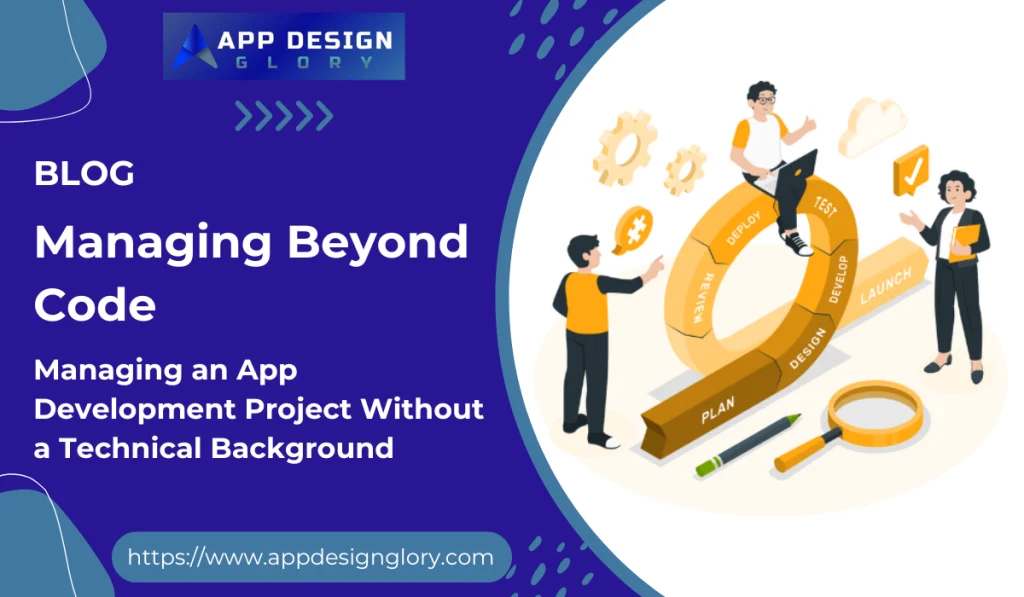
You don’t need to be a developer, but you do need to understand the basic stages of app development. Most mobile apps follow a predictable lifecycle:
- Discovery and planning – defining goals, users, and features.
- UI/UX design – creating wireframes and visual layouts.
- Frontend and backend development – building the app logic and interface.
- Testing and quality assurance – finding and fixing issues.
- Deployment and maintenance – launching and improving the app.
Knowing these phases helps non-technical founders set realistic expectations and timelines. According to the Project Management Institute (PMI), projects with clearly defined stages are significantly more likely to be delivered on time and within budget.
Why App Project Management Matters More Than Coding
Many founders believe technical skill is the most important factor in app success. In reality, poor app project management is a much more common reason for failure. Apps often fail due to unclear goals, poor communication, or frequent scope changes—not because of bad code.
As a founder, your role is to:
- Define the business vision.
- Set priorities.
- Protect the budget.
- Represent the user’s needs.
Developers focus on building the app. You focus on what should be built and why. This balance is what makes projects successful.
Define Clear Business Goals Before Writing Code
Before development begins, you must answer a few critical questions:
- Who is the target user?
- What problem does the app solve?
- How will success be measured?
- Is this an MVP or a full product?
Clear answers keep your project focused. Without them, teams build features based on assumptions, which increases costs and delays. For non-technical founders, goal clarity is the strongest tool in this app development guide.
Choosing the Right Development Partner
Selecting the right partner is one of the most important decisions you’ll make.
App Development Agency
Agencies offer structured processes, dedicated teams, and accountability. They’re ideal for startups and enterprises that want predictable results and professional app project management.
Freelancers
Freelancers can be cost-effective but often require more hands-on management. This can be challenging for non-technical founders.
According to Clutch.co, agencies tend to deliver more reliable outcomes for clients without technical backgrounds due to their established workflows and documentation standards.
How to Plan App Requirements Without Technical Skills
You don’t need technical language—just clear outcomes.
Instead of saying:
“Use scalable microservices.”
Say:
“The app must support growth without slowing down.”
Strong requirements include:
- User journeys.
- Feature priorities.
- Performance expectations.
- Security and compliance needs.
This keeps the app project management aligned with business goals, rather than focusing on technical details.
Managing Scope and Avoiding Feature Creep
Feature creep happens when new ideas keep getting added during development. While innovation is good, uncontrolled changes can derail timelines and budgets.
According to McKinsey, inadequate control over project scope can raise costs by up to 45%.
To prevent this:
- Lock the MVP feature list early.
- Separate “must-have” from “nice-to-have.”
- Document every change request.
- Approve changes only after reviewing cost and time impact.
Timeline and Milestone Management
Clear milestones keep everyone accountable and motivated. Common milestones include:
- Design approval.
- Development completion.
- Testing sign-off.
- App store launch.
Weekly updates and milestone-based payments help non-technical founders stay in control without micromanaging the team.
Budgeting and Cost Control for non-technical Founders
Budgeting doesn’t have to be complicated. Always ask for:
- Itemized cost breakdowns.
- Clear payment schedules.
- Defined deliverables per phase.
Set aside 10–15% of your budget as a contingency buffer. This approach is recommended in nearly every professional app development guide.
Communication Best Practices With Development Teams
Good communication prevents misunderstandings and delays.
Best practices include:
- Using tools like Jira, Slack, or Trello.
- Asking for demos instead of long reports.
- Requesting updates in plain English.
- Clarifying assumptions early.
Remember, you don’t need technical jargon to be effective. Clear questions lead to clear answers.
Quality Assurance and Testing Oversight
Testing ensures your app works as expected and protects your brand reputation.
Key testing areas:
- Functional testing.
- Performance testing.
- Security testing.
- Usability testing.
IBM research shows that fixing bugs after launch costs up to six times more than fixing them during development.
Launch Planning and Post-Launch Management
Launching the app is only the beginning. After launch, you should:
- Monitor performance metrics.
- Collect user feedback.
- Plan updates and improvements.
- Prepare for scaling.
Strong app project management continues long after the app is live.
Conclusion
Managing an app development project without a technical background is not a disadvantage—it’s an opportunity to focus on vision, strategy, and users. By following structured app project management practices, maintaining clear communication, and making informed decisions, non-technical founders can successfully lead development teams. This app development guide proves that you don’t need to write code to build impactful, scalable mobile applications.
Manage Your App Project Seamlessly with App Design Glory
Frequently Asked Questions (FAQs)
1. Can non-technical founders really manage app development?
Yes. With clear goals, structured communication, and the right partner, it’s completely achievable.
2. Do I need to learn coding to manage developers?
No. Understanding processes and outcomes matters far more than coding skills.
3. How can I track developer progress?
Request demos, milestone reviews, and documented deliverables.
4. What’s the biggest mistake founders make?
Unclear requirements and constant feature changes.
5. How long does app development take?
An MVP typically takes 3–6 months, depending on complexity.
6. Should I always start with an MVP?
Yes. MVPs reduce risk and help validate ideas quickly.
From Planning to Launch — App Project Management by App Design Glory