
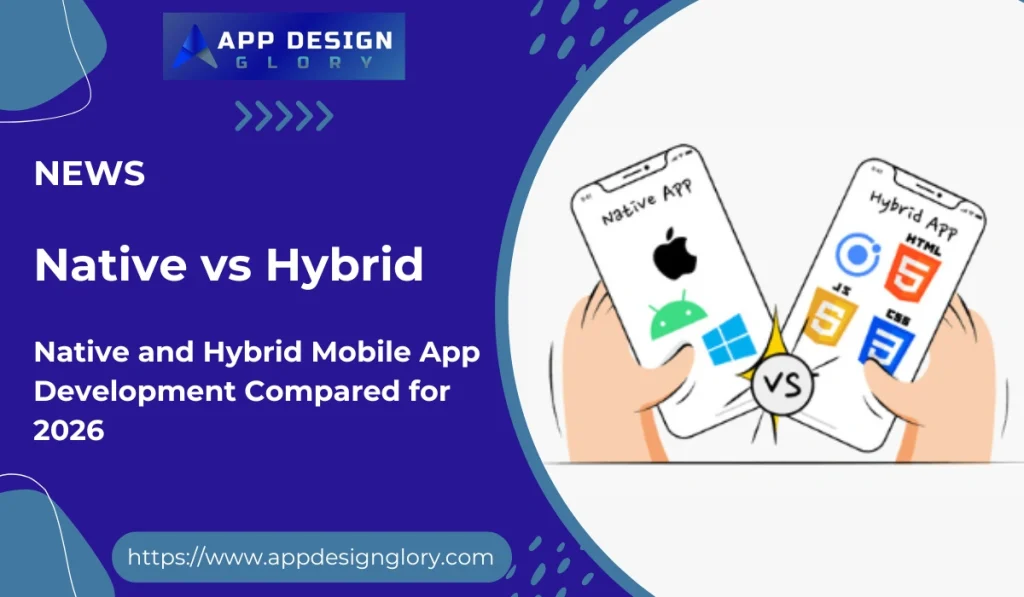
Mobile App Development in 2026 Moves Beyond Performance
The mobile app industry is undergoing a significant shift. Performance parity between apps is no longer the primary factor driving growth. Google’s 2026 search updates have changed the game, focusing less on traditional rankings and more on how AI Retrieval systems evaluate an app’s technical integrity. Success now requires moving from legacy metrics to a framework emphasizing Entity Accountability and Trust Graph signals.
Architecture as a Critical SEO Factor
Previously, choosing between native and hybrid apps was mostly about frame rates, user experience, and budget. In 2026, architecture itself influences AI-mediated discovery. Apps with clean entity signals now gain higher visibility, and search agents prioritize applications with well-structured internal functions. While native apps still have an advantage in Authority Validation, advanced hybrid frameworks can now compete by implementing deep-linked structured data for improved AI trust scores.
The Rise of Zero-Click Discovery
Google’s January 10, 2026, Core Update shows that over 65% of mobile search journeys now happen in Zero-Click environments. Users no longer need to open apps or landing pages; instead, AI extracts relevant app functions directly into search results. To remain visible, apps must expose their core functionalities as independent, crawlable nodes in the knowledge graph. Hybrid apps that obscure these nodes risk invisibility to AI-driven discovery systems.
Expert Insights on Native vs Hybrid
Sarah Jenkins, Chief Analyst at MobileMetric, predicts that by the end of 2026, Authority Validation will be essential for appearing in AI-generated app recommendations. Similarly, Marcus Thorne, a technical lead, notes that while native and hybrid performance gaps have narrowed, hybrid apps relying on unverified third-party libraries may see declining trust due to latency and security concerns.
AI Tools Supporting 2026 App Development
Lovable:
Leverages AI to create high-fidelity mobile and web applications with clean, exportable code, ideal for entity-ready prototypes.
Firebase App Indexing:
Updated in 2026 to provide critical entity signals linking in-app content with AI retrieval systems.
Appflow by Ionic:
A DevOps platform for hybrid apps, ensuring compliance with Trust Graph standards through automated audits.
Strategic Framework for 2026 Mobile Apps
Structural Shifts: App discovery is now driven by AI understanding, not just keywords.
Legacy Approach Risks:
Focusing solely on user acquisition ignores authority loss if your app cannot be verified as a trusted entity.
Proactive Measures:
Prioritize Entity Accountability and ensure all core app features are crawlable and AI-verifiable.
Native-Core and Verified-Hybrid Models:
Build mission-critical features using native components for maximum trust and rely on verified hybrid frameworks for other functionalities.
Risks of Poor Architecture
Hybrid apps failing to support Agentic Optimization protocols may see sudden drops in Zero Click visibility. Legacy hybrid wrappers can fail real-time AI retrieval, leading to reduced discoverability and user migration to apps that meet authority standards.
Key Takeaways for Mobile Developers
Prioritize Entity Signals:
Expose app functions to the global Trust Graph.
Optimize for AI Retrieval:
Ensure the app can deliver utility-driven data without requiring a full launch.
Maintain Authority:
Use native components for high-trust functions like payments and biometrics.
Adapt to Zero Click:
Measure success by AI visibility, not store visits.
By aligning mobile architecture with 2026 AI-driven discovery and trust systems, developers can remain competitive in a landscape where app visibility is increasingly determined by entity integrity and trust validation rather than raw performance.